“Why Can’t My Child Focus?” - What Every Parent Needs to Know About Early ADHD Therapy

If your child struggles to sit still, follow through on tasks, or control their emotions, you may find yourself asking:
“Is something wrong, or is this just a phase?”
“Do they need help, or will they grow out of it?”
“Is it too early to talk about ADHD?”
You’re not alone.
Many parents wrestle with these questions when they start noticing ADHD symptoms in their kids.
The good news? There is a way forward!
And the earlier you take action, the better your child’s outcomes can be.
At Assumption Learning, we specialise in early intervention for ADHD and other developmental challenges. With the right support, your child doesn’t just “manage” their difficulties, they grow stronger, more focused, more confident.
It all starts with understanding what’s really going on.
What ADHD Symptoms in Kids Look Like (And Why It’s Not Just “Bad Behaviour”)
Children with Attention-deficit/hyperactivity disorder (ADHD) aren’t disobedient or lazy; they're working with a brain that’s wired differently.
These differences and symptoms usually show up early in a child’s life, and often include the following:
Trouble focusing even on things they enjoy
Constant movement, fidgeting, or bouncing from one task to another
Difficulty following instructions or finishing tasks
Emotional outbursts or mood swings
Seeming unmotivated or forgetful
Impulsive actions like interrupting or grabbing
If you see several of these signs consistently across different settings (home, school, play), your child may benefit from a proper assessment and possibly, ADHD therapy tailored to their unique needs.
Recognising ADHD Symptoms in Kids: What to Look For and What to Do

Many parents first notice something’s not quite right when their child seems unusually restless, impulsive, or disconnected in settings where focus and cooperation are expected like school, homework time, or even simple conversations.
Understanding the full range of ADHD symptoms in kids is the first step in deciding whether your child needs support.
Common and Overlooked ADHD Symptoms in Kids
Here’s a more detailed list of symptoms that may appear in children with ADHD. These can vary in intensity and frequency:
Inattention-Related ADHD Symptoms:
Struggles to follow instructions
Easily distracted by sights, sounds, or thoughts
Frequently loses or misplaces items
Avoids tasks that require sustained focus (e.g. reading, homework)
Makes careless mistakes in schoolwork or chores
Appears not to listen even when spoken to directly
Hyperactivity ADHD Symptoms:
Constantly fidgeting, tapping, or squirming
Has difficulty staying seated
Talks excessively or loudly
Frequently runs or climbs in inappropriate situations
Has trouble engaging in quiet play
Impulsivity ADHD Symptoms:
Interrupts conversations or games
Blurts out answers or comments
Struggles with turn-taking
Acts without considering consequences
Displays emotional outbursts or sudden mood swings
Less Obvious but Still Significant Signs:
Poor sleep patterns
Low frustration tolerance
Difficulties with self-organisation (bags, schedules, etc.)
Frequent daydreaming or zoning out
Low self-esteem from repeated correction or failure
What Should Parents Do When They Notice These Symptoms?
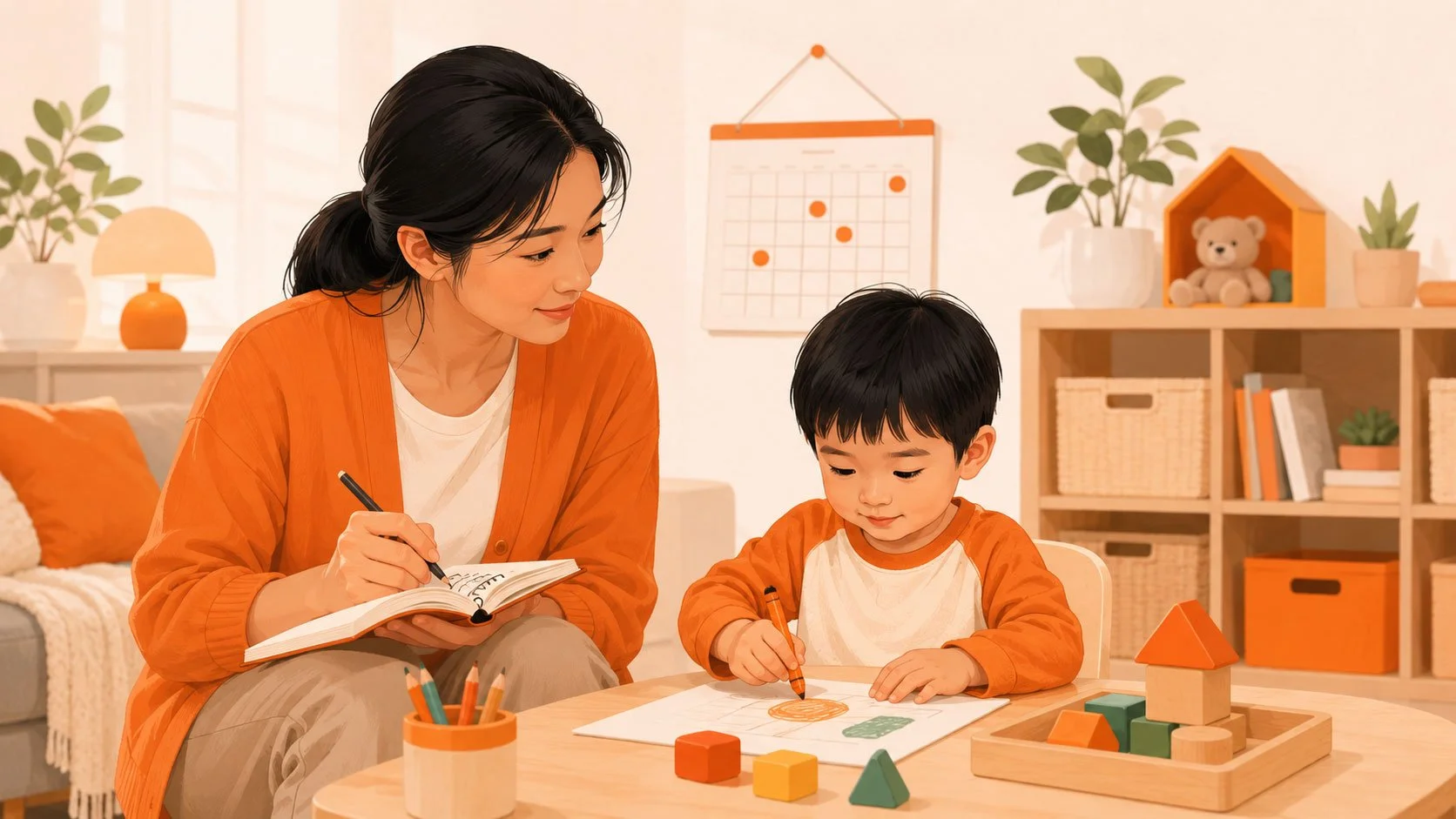
If you’re seeing several of these signs especially across different environments (home, school, social settings) it’s important not to panic. But don’t ignore them either.
Here’s what you can do:
Start a behaviour log. Keep track of what you’re observing, when it happens, and any patterns.
Speak with your child’s teacher or caregiver. They may be seeing similar behaviours in the classroom.
Avoid labels at this stage. Focus on understanding, not judging.
Create calm, structured routines at home. Predictable environments help children with ADHD symptoms feel more secure.
Seek a professional evaluation. Early assessment leads to earlier support and better long-term outcomes.
What Happens When a Therapist or Child Specialist Gets Involved?
If you bring your child to a centre like Assumption Learning, here’s what typically happens:
1. Initial Evaluation:
The therapist will assess your child’s attention, sensory profile, emotional regulation, behavioural patterns, mental stamina, and postural alignments, using developmental checklists, parent interviews, and play-based observation.
2. Tailored Therapy Plan:
Based on the findings, a personalised therapy plan is created. This may include sensory integration, music listening therapy, brain training, or speech and communication support depending on your child’s profile.
3. Collaborative Goals:
Parents are included every step of the way. You’ll receive updates, strategies for home, and insights into your child’s progress.
4. Holistic Support:
Therapists not only address the behaviours they work on the underlying systems that shape focus, emotional control, and cognitive processing.
At Assumption Learning, we believe that every child deserves the chance to learn and grow in a way that works for them. With the right support, children showing ADHD symptoms can thrive academically, socially, and emotionally.
Why Early ADHD Therapy Makes All the Difference

The first few years of a child’s life are critical for brain development. During this time, the brain forms millions of connections that control everything from focus to self-control to emotional regulation.
Here’s the key insight: The sooner we start, the more flexible and teachable those brain systems are.
Early ADHD therapy helps your child build:
Self-regulation skills
Improved attention span
Emotional awareness
Social adaptability
Confidence in daily routines and learning tasks
Instead of reacting to challenges later, through personalised therapy, we prepare your child’s brain and body to handle them now.
Inside Assumption Learning’s ADHD Therapy Approach
At Assumption Learning, we don’t believe in cookie-cutter programmes. Every child is unique, and so is their journey.
We begin with a personalised evaluation to understand your child’s sensory, cognitive, emotional, and behavioural profile.
Then we build a customised therapy plan that may include:
Helps children who are overwhelmed by sound, touch, or movement learn to regulate their responses.
Improves core learning functions like memory, attention, and problem-solving.
Uses rhythmic and auditory input to improve focus, mood regulation, and sensory integration.
From Tantrums to Transformation: What Parents Are Saying About ADHD Therapy at Assumption Learning
We’ve seen children who were once labelled “difficult” go on to thrive in school, social situations, and at home. All with the help of Assumption Learning’s key programmes and experienced therapists.
🟢 One parent of a 9-year-old shared:
“Our daughter used to struggle daily with her schoolwork meltdowns had become part of our routine, especially when tasks felt overwhelming. It was heartbreaking and exhausting for everyone at home.
Since starting therapy at Assumption Learning, we’ve seen a transformation. Within six months, she became noticeably calmer and more confident when tackling schoolwork, and her ADHD symptoms reduced.
Even her teachers commented on how much more focused and cooperative she is in class. It’s been such a relief to finally see her making progress and enjoying learning again.”
🟢 One parent of a 12-year-old shared:
"We came across Assumption Learning online and decided to bring our daughter in for an assessment. The team quickly identified the areas she was struggling with, and we started therapy in June 2023.
Since then, we’ve seen clear improvements in her behaviour and attention span. Agnes has been incredibly thorough in explaining the process, and we really appreciate the personalised approach.
We’re hopeful and excited to see our daughter continue growing with the right support."
🟢 One parent of a 8-year-old shared:
"I’m truly grateful we found Assumption Learning. Before therapy, my son struggled with frequent emotional outbursts, behavioural challenges, and poor eating habits. He also found it incredibly difficult to focus on his studies.
After starting the therapy sessions, we began noticing real changes. His behaviour improved, he became more attentive in his learning, and thanks to the oral therapy introduced by Ms Agnes he even started eating better.
What stands out most is how well the therapy plan was tailored to meet his specific needs. Watching him progress has been such a relief and a joy."
🟢 One parent of a 8-year-old shared:
"My 8-year-old son, diagnosed with moderate to severe ADHD, was aggressive, constantly angry, and had poor appetite due to his medication.
After starting music and massage therapy at Assumption Learning, we saw a major shift. He became calmer, more emotionally stable, and even started eating better.
Ms Agnes took a holistic approach that went beyond behaviour, helping us reduce his medication and improve his overall wellbeing. The environment is transparent and supportive, and for the first time, our home life feels more peaceful.
I’m grateful we found Assumption Learning."
Why Parents Choose Assumption Learning

There’s clear reasons why so many families turn to us when they feel stuck or overwhelmed.
Evidence-Based Therapies & Programmes
Our therapies are grounded in clinical research and child development science. We track progress and adapt as your child grows.
Family-Focused
You’re part of the team. We include you in every step from home strategies to feedback and emotional support.
Fully Customised to Each Child
Every programme is tailored to your child’s needs. No generic worksheets or copy-paste plans.
One-Stop Early Intervention Centre
With all therapies under one roof sensory, speech, music, brain training you won’t need to juggle multiple appointments or specialists.
The Hidden Cost of Waiting
Parents often delay therapy out of fear, guilt, or hope that things will “sort themselves out.” We understand that hesitation.
But here’s the truth:
Early ADHD therapy is not about labeling your child, it's about equipping them.
It’s not about fixing them, it's about helping them succeed in their own way.
And it’s not about doing more, it's about doing what works, with the right support.
The longer these challenges go unaddressed, the harder they become to untangle later. But with early action, small steps lead to big wins at home, in school, and in life.
Take the First Step Today
If you’ve noticed signs of ADHD symptoms in your child like difficulty focusing, emotional outbursts, or constant restlessness it’s okay to ask for help.
With early intervention, the right support can transform not just your child’s learning journey, but your entire family’s daily life.
At Assumption Learning, we offer personalised, evidence-based ADHD therapy in a warm, supportive environment. We’re here to guide you with clarity, compassion, and a plan that works.
The first step? Fill up the form below to book a free evaluation with our expert therapists.
No pressure. Just insight, answers, and a clearer way forward.