
Music Listening Therapy Program
The booster to Communication, Language, Learning, and Social Behaviour regulation
Music Listening Therapy Program
Preparing Your Child’s Classroom Listening Skills for the Future
Much recently, many children have been identified to be achieving below their potential. They have been labelled with various disorders, namely Learning Disability, Auditory Processing Disorder, ADD, or Behavioural Disorder.
Some may struggle to learn to read, write, spell, or master mathematical concepts, whilst others tend to act out, lack self-confidence, and most of the time appear withdrawn at school.
They frustrate parents and teachers, who often feel that they could do better “if only they applied themselves”. These children often "fall through the cracks".
Often, school problems are accompanied by delayed language and/or poor motor development. These are usually coupled with oversensitivity to certain sounds, touch and movement, or an excessive craving for sensory input such as spinning or "rough house" play.
These children may react in ways that are difficult to understand or even predict when with friends, in school or at home. They generally frustrate easily, have temper tantrums, and/or are “thin-skinned”, ill at ease socially or lacking self-confidence.
Some appear aggressive, while others are overly shy and inhibited. Usually, these may be underlying symptoms of a poorly regulated sensory system, particularly affected by auditory disorders causing listening malfunction.
How Music Supports Development & Healing
Music has the remarkable ability to influence a child’s innate development. It can support emotional balance, cognitive growth, and overall well-being.
The reading materials below further explain the science behind these benefits.
Key Benefits of Music Therapy
1. Gateway to Mental Clarity & Intelligence
Music acts as a doorway to better mental clarity, sharper focus, improved concentration, and enhanced intelligence.
2. Boosts Motivation, Creativity & Social Skills
It fuels motivation and creativity, strengthens intuition, and improves social and communication skills — supporting both academic success and healthy relationships.
3. Reduces Stress & Fatigue
During challenging phases of life, music helps reduce stress, mental fatigue, and emotional overwhelm.
4. Restores Blocked or Unheard Frequencies
Trauma or missed developmental milestones in the womb can block certain sound frequencies. Music-based therapeutic treatments help restore these frequencies, supporting emotional regulation and healthy development.
5. Enhances Productivity & Cognitive Performance
Music can shift mood, increase productivity, and improve the cognitive functions required for work and study.
What is Music Listening Therapy in Assumption Learning?
The ear has a dominating role in the cerebral stimulation and cerebral plasticity of the brain. We are bombarded by billions of sensory inputs daily.
How our brain receives, selects, processes, and connects this information provides the neurophysiological foundation for communication and learning.
The Music Listening Therapy we provide is a highly effective technique to remedy most learning difficulties, as it complements most pedagogical and/or therapeutic support. It allows a speedy process in obtaining desired results from therapies. Our Music Listening Therapy can be used at any age be it a toddler or an adult and it also aids in addressing other psychological difficulties and disorders.
How It Works: Retraining the Middle Ear
Through specialised auditory techniques consisting of a mixture of high and low-frequency music, the muscles of the middle ear are contracting and relaxing, providing ‘gymnastics for the ears’.
This restores frequencies that were previously blocked due to trauma, negative emotions, missed developmental stages, or childhood ear infections.
As a result, individuals experience:
● Improved listening
● Faster foreign-language learning
● Better academic performance
● Enhanced work efficiency
● Stronger interpersonal relationships
The Ear’s Powerful Role in Brain Function
The ear is a major source of energy for the brain. In fact, two-thirds of the brain’s cortical charge comes through auditory input.
This cortical charge:
● Drives motivation, creativity, and intuition
● Supports learning and problem-solving
● Promotes mental clarity and emotional balance
● Reduces stress and fatigue
● Helps you perform better and move confidently through life’s challenges
Benefits of our Music Listening Therapy:
Good Attention & Sustainable Concentration
Quality Auditory & Listening
Improved Speech & Language
Better Memory
Stronger Communication skills
Desirable Social skills
Clearer Reading
Sensory Integration
Proper Self-Regulation
Physical Balance, Coordination & Body Rhythm
Vocal performance & Musical Ability
Competent Cognitive & Executive Functions
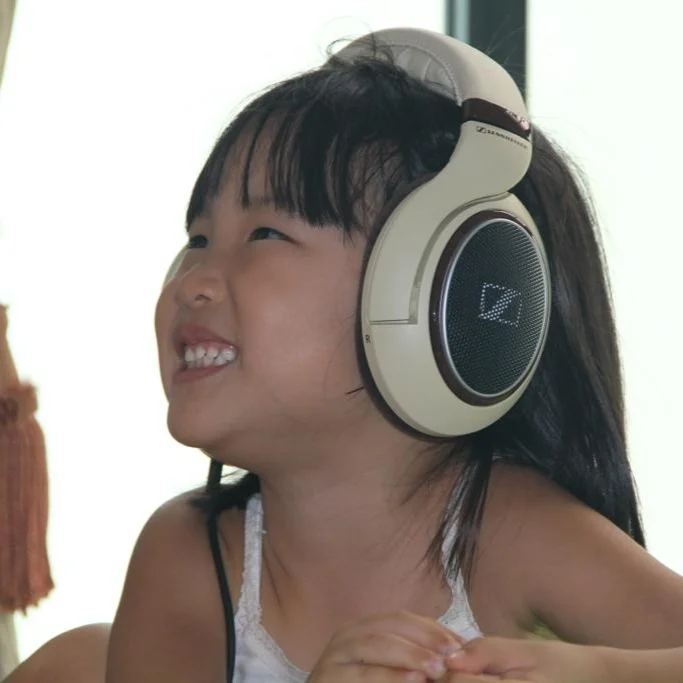




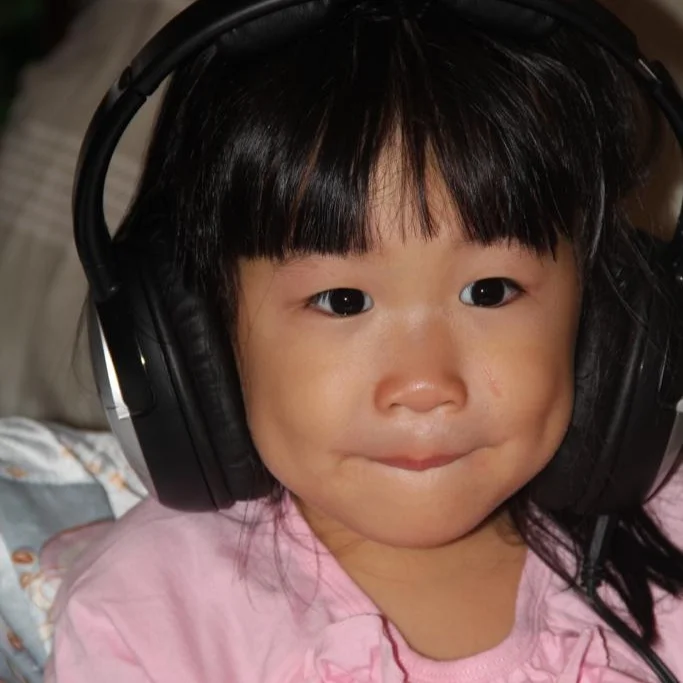
Did you know that the ear is the very first organ to grow in the utero?
Throughout the developmental stages in the womb, the foetus hears sounds and learns language from its mother’s voice. Most of the stimulation our brain receives comes from the ear, making it the most powerful sensory integrator in the human body.
Hearing is not listening and it differs. Listening is an action; hearing is passive, whilst listening is active, requiring conscious effort. Listening is the ability to use the ear attentively for the purpose of learning and communicating, without being emotionally disturbed. Good listening is the key to clarity, concentration, and arousal. It is the underlying platform for the development of communication, language, and learning. An individual’s well-being, social behaviour, and academic performance are greatly determined by the quality of their listening. Listening problems are often the root cause of many learning difficulties.
When listening, the whole body works to process sound, which travels via air and bone conduction to the brain and entire nervous system. Our inner ear comprises the vestibular system which gives us a sense of gravitation, movement, and balance together with the cochlea, which provides sound perception. In order to make sense of perceived information, tactile, visual, and auditory input must be interpreted through the vestibular-cochlear system.
The listening function links the inner and outer world, helping us to focus by cutting off irrelevant stimuli so that we can attend and concentrate. It helps us sort and organise perceived information into meaningful messages. When this process is disrupted, the resulting listening problem can impact higher-level functions, such as academic learning and social-emotional adjustment. These abilities improve only when the underlying sensory process is addressed.
BOOK A CONSULTATION
The ultimate objective of our listening therapy is to develop and/or restore adaptive listening. To ensure the best results for your child or yourself, please drop us an email/call to enquire more on our Listening Therapy. We offer both FREE Consultation and FREE Evaluation. Call us now for a free evaluation upon consultation with our friendly consultant.